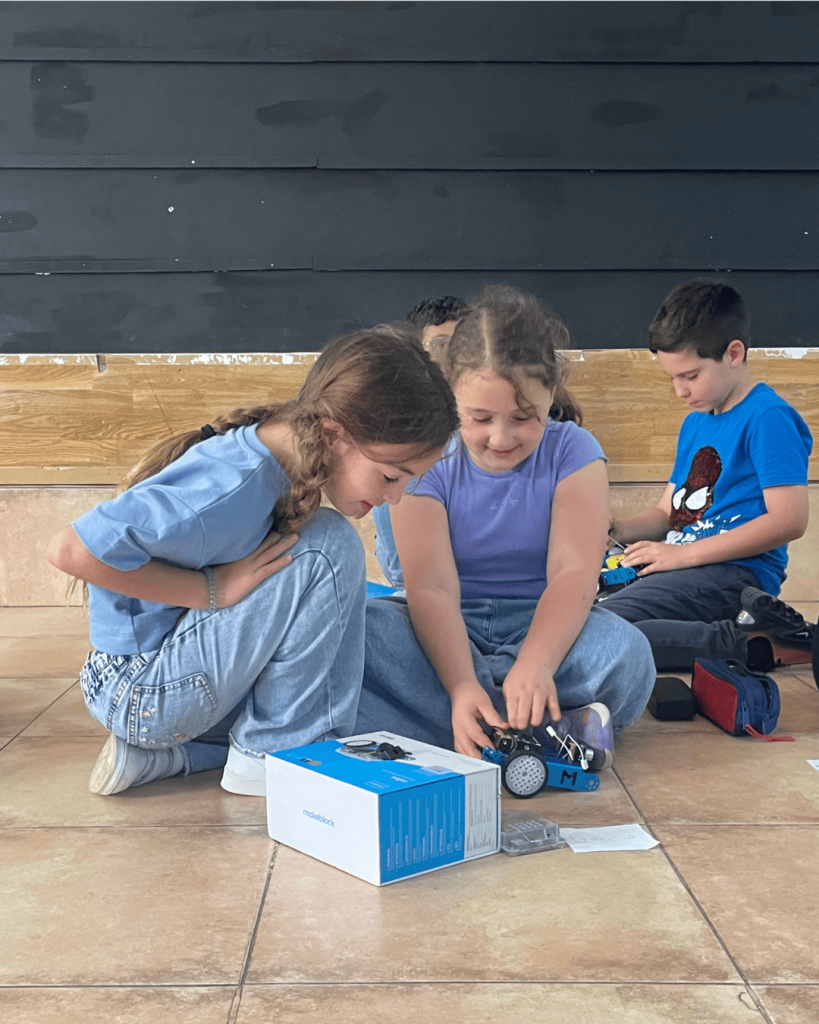

Last week our robotics students closed out the term in the best way possible — with a Robotics Talent Show. In their final lesson before summer, they coded, tested, and presented their own creations from start to finish.
Here’s what they came up with.
Three projects. All different. All genuinely impressive for a single lesson.
The delivery robot
One student had a clear concept: a robot that could bring things to you. The idea was that if you were sitting across the room, you could signal it, and it would navigate toward you on its own.
To make that work, he built his robot around an ultrasonic sensor. When we asked him to explain how it works, he put it simply:
“It sends out kind of like a line, and when it bounces back, it measures the time it takes to come back.”
That’s exactly it — and exactly how he programmed the robot to respond, moving toward its target based on the distance the sensor detected. The same principle is used in parking sensors and industrial automation — he just happened to apply it to a delivery robot he designed himself.
The bridge
This one was less about code and more about physics. The challenge: build a structure that could hold the robot’s full weight. Students worked through the engineering, tested it, figured out why it failed, and fixed it.
The battle robot
For this project, students first constructed a small city out of building blocks, then programmed their robot to enter it and knock sections down. What sounds straightforward involved real decisions: mapping out a path, writing the movement sequence, and making sure the robot followed instructions precisely enough to actually navigate the space rather than just crash into the first wall it hit.
It was a practical lesson in how coding translates to physical action — and the satisfaction of watching it work was well earned.
Beyond the builds
The talent show wasn’t just a technical challenge — it was a communication one too. Before anything was built, students had to come up with an idea, agree on it as a group, and figure out how to bring it to life together. Then, at the end, they had to stand up and present it.
That means the session covered a lot more than robotics: teamwork, creative thinking, and the ability to explain your work clearly and confidently.
About the course
Our robotics programme runs for students aged 8 to 13 and is built around one idea: children learn best when they are genuinely invested in what they are making.
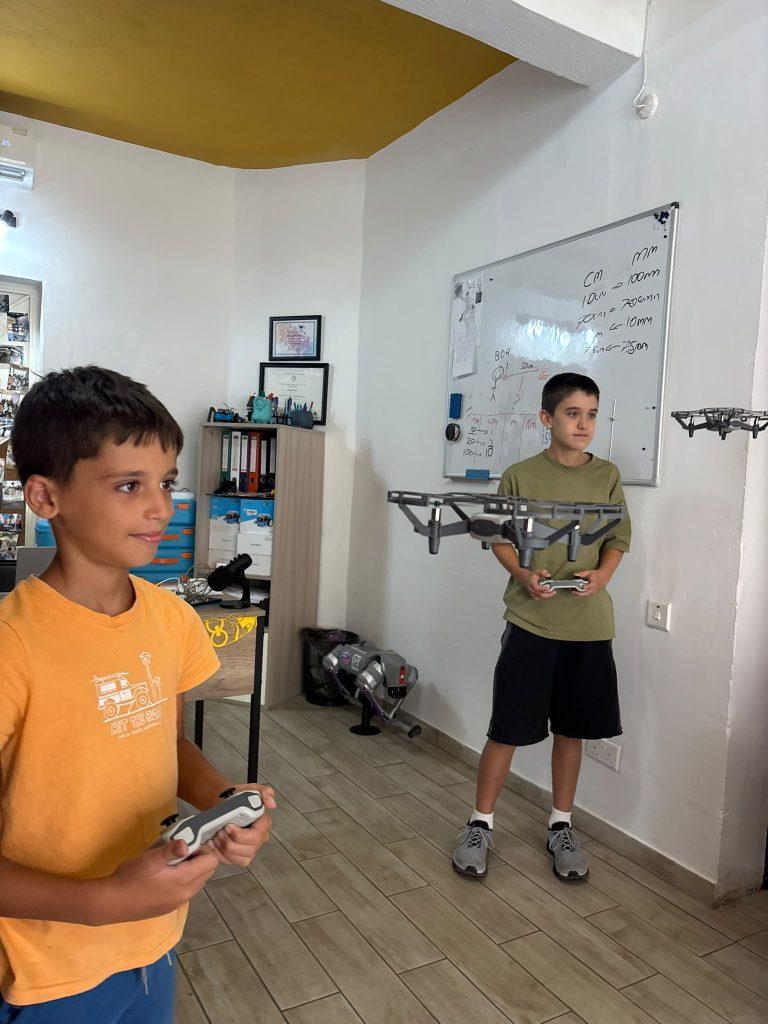
Across the course, students get hands-on time with real robotics kits, coding, 3D printing, sensors, electronics, virtual reality, and engineering challenges. This summer we are also introducing drones — students will be programming them directly, learning spatial thinking and logical sequencing through something that moves through real space.
Every session is practical. The code they write determines how their robot moves, the structure they design gets tested in the real world, and the problems they solve are ones they came up with themselves.
We’re now getting ready for a packed summer of robotics, coding, and creativity — and spaces are almost fully booked.
If you want your child to be part of it, click here to reserve your spot.
Want to hear the students explain their projects themselves? You can watch the short video that inspired this article here.